It’s 10:00 PM on the first night. The house is quiet, the kids are finally asleep, and there you are, standing in the hallway holding a warm, squirming bundle of fur. To your left is the master bedroom. To your right is the guest room. And sitting on the floor between you and your partner is the metal wire crate that has sparked a debate worthy of a Supreme Court ruling. One of you wants the puppy in bed for snuggles; the other wants the crate in the laundry room to avoid "spoiling" the dog. Before you flip a coin, let’s look at how this single decision shapes your puppy’s future habits, bladder control, and confidence.
🛏️ Option 1: Crate in the Bedroom
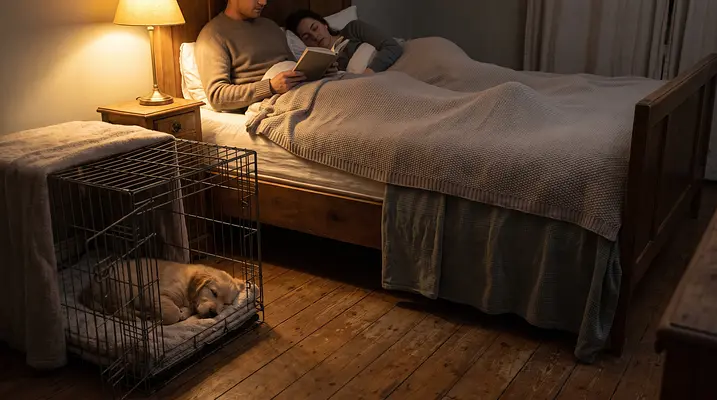
Placing the crate right next to your bed is often the gold standard for new puppy owners. It bridges the gap between total isolation and total freedom, offering comfort without the chaos.
- Hear your puppy’s whines immediately to prevent accidents. 🦮
- **Soothe your puppy with a gentle hand through the crate bars during wake-ups.
- **Bond closely by letting your puppy smell your scent nearby.
- **Reduce separation anxiety by establishing you as a comforting presence.
- **Accept that you might lose a little sleep during the first few nights of adjustment.
🚪 Option 2: Crate in Another Room
Some owners prefer to keep the crate in a laundry room, kitchen, or guest bedroom to maintain human sleep hygiene. This approach works well for light sleepers but requires a dedicated training schedule.
- **Enjoy uninterrupted sleep if you are a light sleeper prone to waking at every noise. 💤
- **Teach independence by helping your puppy self-soothe without immediate reassurance.
- **Establish a distinct "sleep zone" that remains consistent regardless of where you are.
- **Risk missing subtle potty signals that could lead to messy cleanup in the morning.
- **Prepare for louder, more persistent crying during the initial nights of isolation.
🐾 Option 3: Sleeping in Your Bed
The ultimate goal for many dog lovers is co-sleeping, but starting here has risks. It is a high-reward option that comes with significant management strings attached.
- **Maximize bonding opportunities through physical closeness and warmth. 🥰
- **Eliminate the "middle of the night" potty trip since the puppy is already right there.
- **Risk serious injury if you accidentally roll over on a small puppy during deep sleep.
- **Create potential boundary issues regarding resource guarding or space dominance later on.
- **Face a difficult transition later if you decide the bed is no longer an option.
🚽 Impact on Potty Training and Independence
Your choice of sleeping arrangement dictates the speed of house training. The closer you are, the faster you can respond, but the further you are, the more independence the puppy learns—sometimes out of necessity.
- **React faster to potty needs when the crate is within arm’s reach of your bed. 🧻
- **Prepect accidents if the crate is too far away for you to hear a subtle whimper.
- **Build confidence by gradually moving the crate away from your bedside over time.
- **Avoid reinforcing "attention barking" by waiting for a moment of silence before approaching.
- **Establish a routine that balances comfort with the necessity of holding their bladder.
🔄 How to Transition Sleeping Locations
You aren't married to your first decision. Many owners start with the crate in the bedroom and move it elsewhere later, or vice versa. The key is patience and a slow, steady hand.
- **Move the crate only a few feet every two to three nights to prevent anxiety. 📏
- **Maintain the same bedtime routine to provide familiarity amidst the change.
- **Use a white noise machine to mask household sounds that might trigger barking.
- **Reward quiet behavior enthusiastically when the puppy settles in the new location.
- **Revert one step if the puppy shows signs of distress or regresses in potty training.
Making the right choice for your household is about balancing your lifestyle with your puppy’s developmental needs. There is no "wrong" answer, only the answer that works for your sleep schedule and training goals. Whether you choose the bedroom, the guest room, or eventually the big bed, consistency is the secret sauce to a well-rested household. Keep the routine steady, listen to your puppy, and remember that this phase is just a small chapter in a long, happy life together.
📋 Quick Action Plan
- Choose the crate location tonight based on your sleep habits and hearing ability.
- Set an alarm for a middle-of-the-night potty break to avoid accidents. ⏰
- Place a worn t-shirt in the crate to provide a familiar, comforting scent.
- Ignore attention-seeking barks but respond immediately to potty whines.
- Plan to keep the crate in the initial spot for at least two weeks before moving it.
Disclaimer: This blog post provides general advice and does not replace professional veterinary guidance. If your puppy exhibits signs of severe anxiety, health issues, or behavioral problems, please consult your vet immediately.
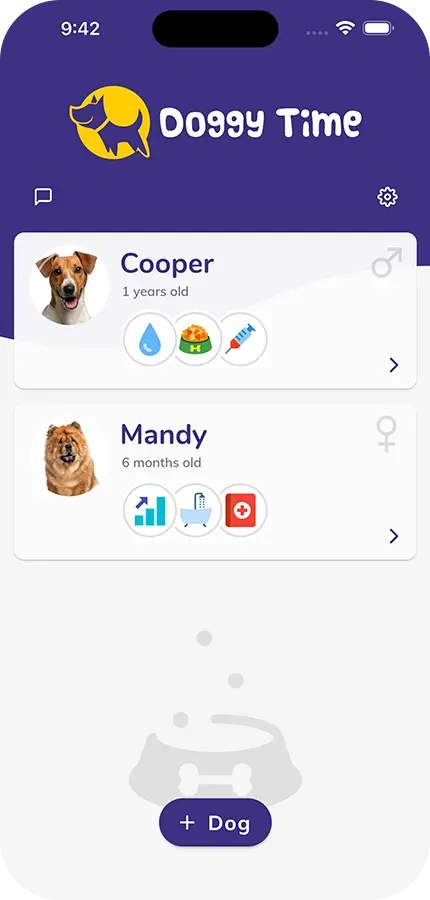
If you are looking for a way to stay organized during these early puppy days, consider using the Doggy Time app. It helps you collaborate with family members on logging activities, setting smart alarms for potty breaks, and tracking training progress, ensuring everyone is on the same page.