Quiz rapide : Combien de fois par jour pensez-vous qu'un chiot en bonne santé doit-il faire caca ? Une fois, comme un chien adulte ? Trois fois ? Ou pourrait-ce aller jusqu'à cinq fois ? Si vous avez donné une réponse comprise dans cette fourchette, vous avez peut-être raison, mais la réponse change presque chaque semaine au fur et à mesure que votre petit grandit.
Accueillir un nouveau chiot, c’est un tourbillon de câlins, de jeux, et oui, beaucoup de pauses toilettes. On a parfois l’impression de rester dehors sous la pluie toutes les vingt minutes, à se demander si tout ce flux est vraiment normal. Comprendre le rythme du système digestif de votre chiot est la clé d'une réussite dans la propreté et d'une tranquillité d’esprit. Plongeons dans ce qui est normal, ce qui détermine l’horaire, et quand vous devriez vous inquiéter.
📊 Fréquence normale selon l’âge
Le système digestif d’un chiot fonctionne beaucoup plus vite que celui d’un chien adulte, ce qui signifie que la nourriture entre et les déchets sortent à une vitesse surprenante. En grandissant, leur métabolisme ralentit, et le nombre de passages aux toilettes diminuera progressivement.
- Attendez-vous à ce que votre chiot fasse caca entre 4 et 5 fois par jour entre 8 et 12 semaines.
- Prévoyez environ 3 à 4 selles par jour une fois qu’il atteint l’âge de 3 à 6 mois.
- Anticipez un rythme stabilisé de 2 à 3 fois par jour lorsqu’il approche de l’âge adulte, entre 6 et 12 mois.
- Souvenez-vous que les tout jeunes chiots ont presque aucun contrôle intestinal et doivent aller faire leurs besoins juste après s’être réveillés ou avoir mangé. 🐾
🍽️ Comment l’alimentation influence l’horaire
Ce qui entre doit sortir, et la qualité ainsi que le type de nourriture que vous donnez à votre chiot jouent un rôle important dans ses habitudes aux toilettes. Les aliments de haute qualité, à base d’ingrédients digestibles, produisent souvent moins de déchets, tandis que les aliments riches en additifs peuvent entraîner des selles plus fréquentes ou plus abondantes.
- Choisissez une nourriture pour chiots de haute qualité, adaptée à la taille de sa race et à son âge.
- Sachez que la nourriture humide traverse le système plus rapidement que la croquette sèche, ce qui peut conduire à des selles plus fréquentes. 🥫
- Introduisez tout nouvel aliment progressivement sur une semaine pour éviter les troubles digestifs qui pourraient modifier la fréquence des selles.
- Surveillez le volume des selles ; des selles volumineuses et molles indiquent souvent un excès de fibres ou d’additifs dans l’alimentation.
⏰ Le lien entre repas et selles
L’un des moyens les plus fiables de prévoir quand votre chiot doit sortir est d’établir un horaire d’alimentation strict. Les chiots ont un « réflexe gastro-colique », ce qui signifie que manger déclenche l’envie de déféquer, généralement entre 20 et 30 minutes après avoir terminé un repas.
- Nourrissez votre chiot aux mêmes heures précises chaque jour, plutôt que de laisser de la nourriture disponible en libre-service. 🕒
- Emmenez votre chiot dehors pour une pause toilette environ 20 minutes après qu’il ait fini de manger.
- Retirez la gamelle après 15 minutes pour l’habituer à manger selon votre planning, ce qui régule aussi son horaire de selles.
- Évitez de donner un gros repas juste avant le coucher pour réduire les sorties nocturnes.
🚨 Ce que signifient les changements de fréquence
Un changement soudain dans l’horaire des selles de votre chiot peut être un signal que quelque chose ne va pas à l’intérieur. Bien qu’une absence ponctuelle de selle ne soit généralement pas alarmante, des changements persistants de fréquence ou de consistance méritent une attention plus approfondie sur sa santé et son environnement.
- Surveillez la diarrhée ou les petites éjections fréquentes, qui indiquent généralement une irritation ou un léger trouble gastrique. 💧
- Remarquez si votre chiot fait des efforts pour aller à la selle sans rien produire, ce qui peut signaler une constipation ou un blocage.
- Vérifiez la présence de sang ou de mucus dans les selles, signe d’une inflammation ou d’une infection nécessitant une attention médicale.
- Tenez compte de changements récents dans le foyer, comme un voyage ou l’arrivée d’un nouvel animal, car le stress peut provoquer une diarrhée ou une constipation temporaire.
📞 Quand appeler le vétérinaire
Il peut être difficile de savoir si une selle molle est simplement passagère ou le signe d’un problème grave comme le parvovirus ou des parasites. Savoir quand téléphoner peut vous éviter des nuits blanches et potentiellement sauver la vie de votre chiot.
- Appelez immédiatement votre vétérinaire si votre chiot a des selles sanglantes ou vomit violemment. 🚑
- Consultez rapidement si un chiot de moins de 12 semaines a la diarrhée, car il peut se déshydrater très vite.
- Contactez la clinique si vous pensez que votre chiot a avalé un objet étranger comme un jouet, une chaussette ou une pierre.
- Prenez rendez-vous si le chiot est apathique, refuse de manger, ou a de la fièvre en plus de troubles intestinaux.
- Apportez un échantillon frais de selles à votre rendez-vous pour permettre au vétérinaire de dépister rapidement les parasites. 🧊
📝 Plan d’action rapide
Vous pouvez commencer dès aujourd’hui à réguler les habitudes toilette de votre chiot avec quelques ajustements simples à votre routine. La régularité est l’ingrédient secret de la réussite de l’apprentissage de la propreté et d’un chiot en bonne santé et heureux.
- Réglez une alarme régulière pour les heures de repas afin de réguler son horloge digestive.
- Emmenez votre chiot dehors 20 minutes après chaque repas, sans exception.
- Notez chaque pause toilette réussie dans un carnet ou une application pour repérer les tendances.
- Passez à une nourriture pour chiots de haute qualité si vous remarquez des selles excessives ou de mauvaise qualité.
- Conservez un échantillon de selles anormales dans un sachet pour la visite chez le vétérinaire en cas de problème.
Comprendre l’horaire de selles de votre chiot fait partie intégrante de son bon état de santé et de la propreté de vos sols. Bien que la fréquence évolue avec la croissance, le besoin d’une routine régulière reste identique. En surveillant son alimentation et en planifiant ses repas, vous pourrez prévoir exactement quand la nature appelle.
Avertissement : Ce billet de blog est fourni à titre informatif uniquement et ne constitue pas un avis vétérinaire. Si vous êtes inquiet pour la santé de votre chiot, veuillez consulter immédiatement un vétérinaire agréé.
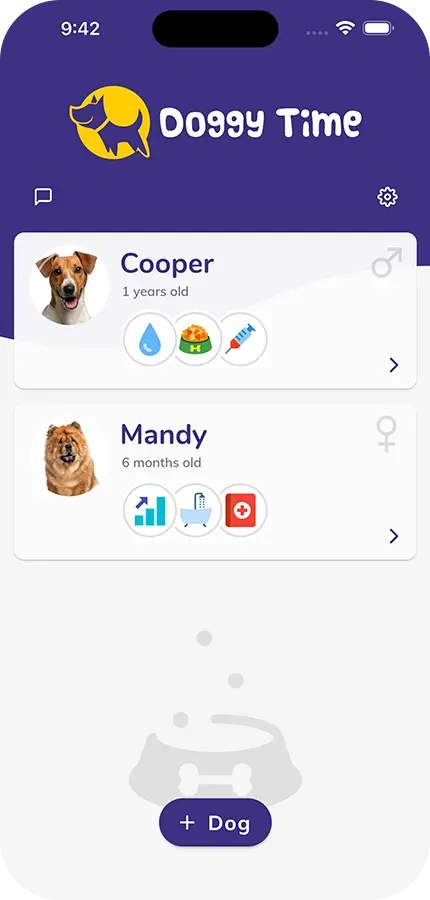
Vous cherchez un moyen plus simple de tout suivre ? Découvrez l’application Doggy Time ! Elle vous aide à collaborer avec les membres de votre famille pour enregistrer les activités de votre animal, les étapes de dressage et les éléments de santé. Grâce à des alarmes intelligentes et des fonctionnalités de planification, vous ne manquerez plus jamais un repas ni une pause toilette.